Category: Uncategorised

Blog Post 7

How do notable individuals use social media?

When I think of “notable individuals” I think of the influencers, politicians, and celebrities. When looking at the way they use social media I think it greatly depends on the audience you are trying to reach and if you are promoting brands etc. Influencers commonly use social media to promote brands that might be sponsoring them or host live streams of them going about their days. Right now, I see a lot of “Gym influencers” promoting different clothing brands, selling workouts, or promoting different proteins they take to look the way they look. Celebrities (movie stars, singer/songwriters) also might post content that promotes their brand or posts content that raises awareness of various issues.  Reflecting on what was discussed in the chat, one of my group members highlighted in the reading for the week about fake news gaining prominence during the 2016 US Presidential election and how Donald Trump weaponized the term to criticize media outlets. This shows how different people with high public following can influence others using their social platforms.

What are the benefits of being in the public eye and having a PLN?

Being in the public eye allows you to get brand deals, make money from posting content, and allows you to continue to expand your online network. One of the biggests examples I can think of is the D’amelio family. The youngest daughter started dancing on TikTok and now they go to big celebrity events, have a bunch of brand deals, and their own TV show, similar to the Kardashians as well. With a high following, starting your own brand business and promoting that business is also something I feel like I see happening a lot with celebrities nowadays. Having a PLN in generals is a great way to connect with like-minded individuals and learn new things from others. It is also a great way to connect with employers and explore job opportunities. 
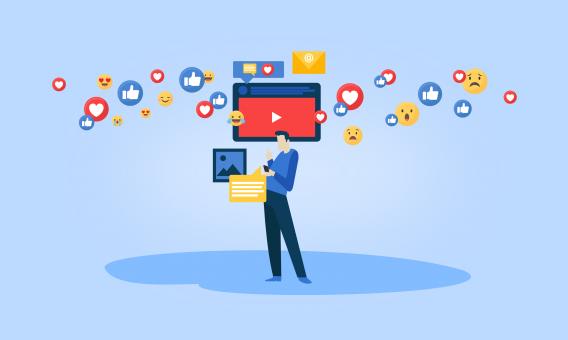
Image 1. This image shows how one can like and comment on social content.

Building a community with online tools provided by the employer can be limiting, what are the perceived restrictions and benefits?

Employer related online tools can be limiting in the sense that it only applies to the work that you might do in that position. Possible benefits of using employer online tools can include online training to help you further your skills or collaboration between teams through online company chats. Tools used by your company might also provide one access to contact information for other companies that you could collaborate and partner with on projects. Depending on your company, you can also get the opportunity to go to conventions or conferences, where you can connect with other employers or collaborate with other businesses.

Delivering information in a connected society requires verifiable resources, how do you build a PLN to rely on? How do those, who are veteran storytellers, minimize the risk of sharing misinformation?

Misinformation will come your way no matter what. With so many different online platforms sharing information, it is easy to get overwhelmed and confused on which to listen to. In my personal experience, as a Biology student we have been taught to go through Google Scholar or look at online articles that have been peer reviewed for credible information. When it comes to online news sources, I always like to look at a variety of online News platforms and pay less attention to what’s posted on social media from just general/ individual users. If you do look on social media for News, always look for the blue check mark showing that the account has been verified. When sharing information with others, or when your friends share stories or information with you, it is always best to check those facts using resources and online credible tools. All your friends might have different opinions on different topics, and that’s okay! To best understand certain topics yourself, always do your own research! 
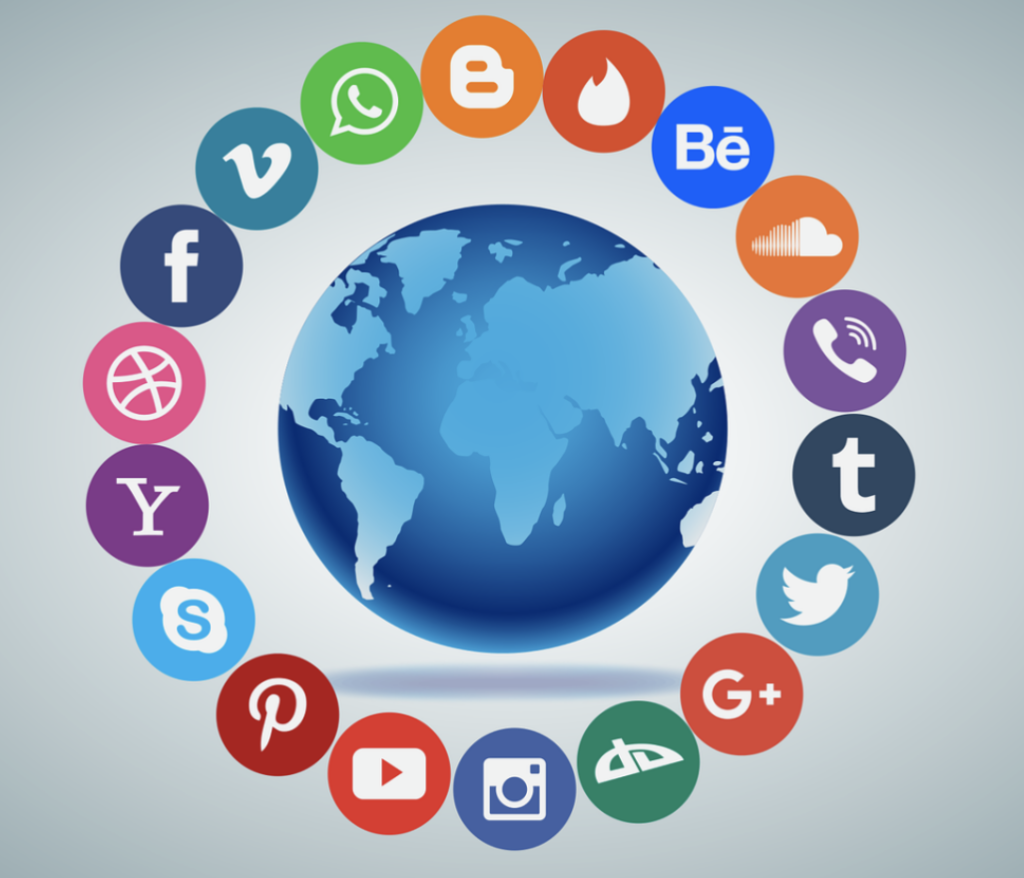
Image 2. Demonstrates the various media used around the globe

How to best address negative replies and reviews which reflect your personal values? Identify the risks and benefits of engaging with a public audience in a media space – What are the risks for a public figure or person in a position of trust (educator, lawyer, and government official)?

Reflecting on the podcast we listened to this week, the person being interviewed had told a story about how they would get physical “hate mail” letters mailed to them and phone calls to complain about what they looked like or what they said on the air/ TV that day. It is always a risk nowadays no matter who you are, or what platform you have, that there will be “haters” and scammers that might post rude or unwelcoming comments. A lot of celebrities speak about the different ways that they cope with these online “hate” comments, and a lot of them say the same thing. That it is best to ignore them as much as possible, and change settings on your social platform to limit the amount of comments or to filter the unwanted comments. Other risks or more extreme risks that people with a big online presence or politicians and lawyers may face are possible death threats or threats against their families.

When it comes to educators, one of the more recent things that I’ve noticed a lot on social platforms is teachers filming themselves in the classroom asking their students questions or talking to their students. A lot of these content creators do a ‘day in the life as a teacher’, or film videos of their students’ reactions to lessons. The students are obviously off camera in these videos, but a lot of the comments under these videos are towards the educators and how they might be communicating with their students and are being criticized online. 

References:

Lui, Sophie. “Sophie Lui- EDCI 338”. YouTube. Uploaded June 6th 2022. https://www.youtube.com/watch?v=wfcXgKLzOVM

Blog Post 6

How does social media engage communications?

Social media platforms such as Instagram allow us to live stream, message each other, and comment on each other’s posts! This real-time communication allows us to connect with each other instantly. Social media provides a platform for not just individuals but for businesses and organizations, where they can promote their business and projects to a wide audience. Platforms like twitter can engage discussions between users and provide up to date quick info posts on News stories, or my main use for twitter – seeing if there is a snow day that day or not. As mentioned in the article by Jessica Clark and Patricia Aufderheide “Publics are fed by the flow of communication”.  Through the sharing of videos and images, social media can engage all types of learners and allow us to connect with those with similar interests. 

How does social media challenge communications? Is it inclusive?

Social media can challenge communications through the spread of possible misinformation. This question got me thinking back to how during COVID everyone seemed to be a pandemic and vaccine expert, and a lot of the information that was being spread on social media sites was misinformation. Another one of the big things we have all learned to be careful of when being online are possible “hackers”, accounts pretending to be people they are not, and online cyberbullying. As many users can “hide behind the screen” we can see a lot of ugly comments under public figures’ posts and just flat out cyberbullying happening in online spaces. 

Social media communications can be both inclusive and exclusive. If users have similar interests they can join groups on Facebook where you can connect with others and share content with each other. Online social networks can also diversify our views on matters, allow us to meet new people, and anyone can have a social media account! Social platforms can also be somewhat exclusive as there are not always captions on videos, you need internet access to view social platforms, and as discussed before- cyberbullying can deter many away from participating in online discussion or posting media. As mentioned in the reading by Jessica Clark and Patricia Aufderheide “In order to function well, public media projects and platforms designed to engage stakeholders around issues must be both accessible to and representative of the entire population….”. Further proving that to have a successful inclusive space online it needs to be accessible and engaging for everyone!

Does your personal learning network amplify the views of others?

Looking at my own PLN, I don’t feel that it amplifies the views of others. Just looking at my social media, the main things I post are pictures of friends, and I only use Facebook to connect with UVic club social groups and because most of my relatives only use Facebook. On these platforms I haven’t re-posted or commented on political matters and have kept views on public matters somewhat private from my PLN. I do however sometimes re-post projects or like organizations and companies posts that I follow on Instagram/ Linkedin! Diversifying your PLN is always a good idea, so you can explore different views and opinions. If you keep to a very limited PLN, you won’t learn new things and your current views will only be reinforced. 

Image 1. Representing communications of employer social media expectations

The policies of employer social media communication expectations.

When considering how to professionally communicate on social media as an employee, I believe it is best to keep your social media unbiased and somewhat professional. When I say “professional” I don’t believe you need headshots and quotes from your organization, but to be aware of what you post on your social media as if employers can view it. Another policy that could be put in place is to keep knowledge of your work confidential and to maintain respect for others in your social network. 

How to better use social media to build PLN? Influencers & Commentators.

Using social media to build your PLN allows you to make diverse and new connections with others. Social media platforms such as Instagram and Tiktok have “for your pages” and give suggestions under the explore tabs with suggested content that you might like! This allows you to view new content creators and connect with others that might have different views, further diversifying your PLN. A lot of influencers use hashtags and have public accounts, allowing their content to reach more people or connect to a specific audience that might view the hashtags. As mentioned by Amirael in our discussion groups, in the podcast for the week “the interviewee talked about how hashtags can be as a call to action or change..”. Along with making a statement or call for action, hashtags can also connect content creators with brands and other companies who might be looking for creators to help promote their brand! 

Commenting on others posts or discussions gets you participating in online networks. Any comments you make on post can build your PLN by showing that creator support for their content. Participating in online discussions through platforms such as Facebook groups or Twitter, also allow you to connect with other like-minded individuals and also build your PLN by showing that you support that content creator/ what they had posted. 

References: 

Clark, J., & Aufderheide, P. (2011). A New Vision for Public Media. In S. C. Jansen, J. Pooley, & L. Taub-Pervizpour (Eds.), Media and Social Justice (pp. 55–67). New York: Palgrave Macmillan US. Retrieved 23 October 2023 from https://doi.org/10.1057/9780230119796_5 

Blog Post 2

What is a digital identity?

After reading and watching the videos from this week’s material, digital identity is quite literally everything we post, share, like, comment, or interact with on social media and the internet. It is our “digital footprint”. Others that follow our social media accounts can view what we post and share. After reading the “Identity making and social media” paper, digital identity encapsulates the whole idea of identity and belonging in our networked spaces. Posting and sharing specific content to fit in with the social norm, possibly regardless of our lives outside of social media. As mentioned by Goffman they “describe a world where our interactions with others are not necessarily authentic; in other words, we ‘role play’ situations conforming to societal roles expected of us”. Reflecting on these points, digital identity is not always authentic but plays a large role in our networked connections. As said by Goffman “if one is to be seen as belonging in a social network, one must dress the part and act the part, and do the correct leisure”. Overall, digital identity is how you showcase yourself on the internet!

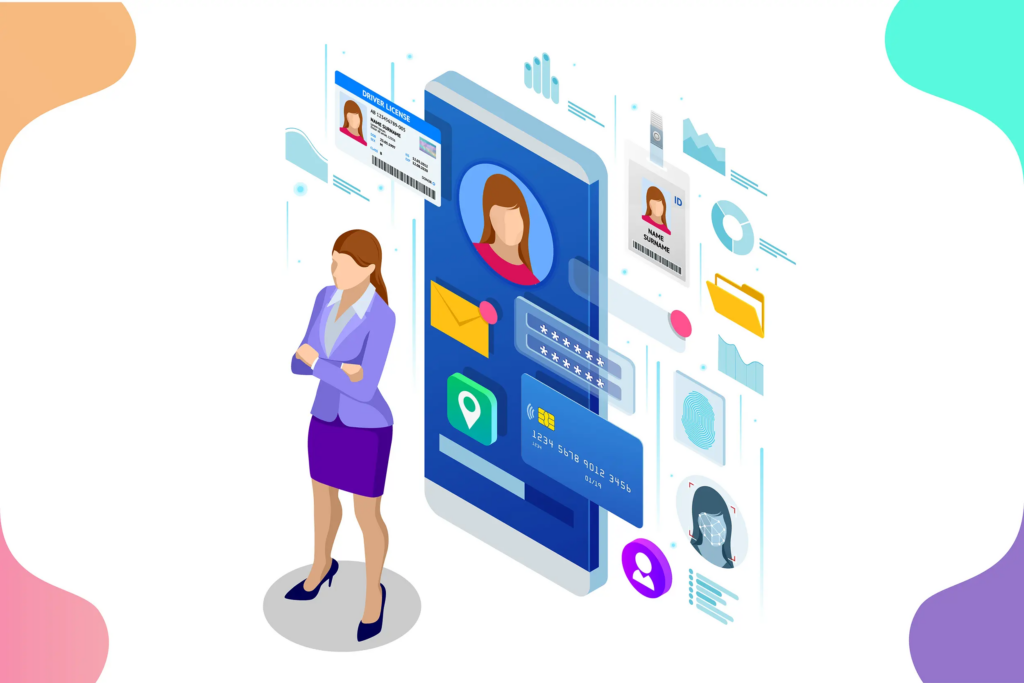
Image representing our digital identity and our digital footprint online.

How do personal versus professional approaches to digital identity affect social media use?

In my personal experiences I use networked spaces for different uses, but am also aware of the fact that any employer could view any of those spaces. For instance I use Instagram and VSCO as a way to connect with my friends which are both public accounts, so I therefore remember to think “what would an employer think when viewing these images?”. I also use LinkedIn which I would consider my professional approach to digital identity, where I have my job and educational background displayed for employers to view. 

One comment from the ‘Identity making and social media’ article I found quite funny and relatable was the comment about the author having “friends and colleagues who have out-of-date personal pages on Facebook”. I relate to this so much because although I have Facebook, I do not use it to post things but to only be present in UVic club groups. My Facebook is also a place for distant relatives to wish me happy birthday…. majority of which is my entire facebook profile.  

Relating back to the question, some of my social media is out of date and it might be confusing for some employers to navigate through. I also have become increasingly aware of what I am posting and sharing on social media and how that identity is displayed to employers and my professional network. 

How do digital identities converge in networked publics – what are the impacts and/or benefits?

Online networks provide us a space for leisure and entertainment. It also is a space for us to feel a sense of community, to purchase items, stay connected to the news and each other. When thinking about how to answer this question the one thing I thought of is that all humans have opinions, and a lot of us express those opinions on our networked spaces, thus converging our digital identities. Reflecting on the videos and reading for this week there was discussion on political views and opinions on the news being shared over networked spaces and connecting people together. As said in the press conference video “Digital identity can increase political and social inclusion..” and in the ‘Identity making and social media reading’ “the Net continues to play a key role in supporting the rise of new social movements and radical politics…”. This got me thinking back to COVID years when everyone on the internet thought they were a pandemic expert, the backlash some got for their opinions on the matter, the anti-vaxxers vs vaxxers debates, the mis-infomation on the news about the virus and more! To conclude my thoughts, the impacts of converging digital identities and opinions on networked publics can lead to protests, political movements, and the sharing of mis-information. The Net can also be a “positive space for constructing and maintaining social networks, identity and belonging”. 

Image shows ways in which we are connected online and how we use the Net in our everyday lives.

What does my digital identity look like? 

Completing the digital identity exercise in our groups, I think we all realized how much bigger our social media reach and digital footprints actually are. In our chat we discussed the difference between having public and private social media accounts and when we looked up our names/ Instagram usernames on google what images came up. A lot of us found at least one picture of ourselves online regardless of the private social media account. When I googled my instagram handle online I found direct links to my instagram, Facebook, VSCO account, and the UVic Dance Company account. Looking through the images there were 3 images of me, one when I was 12, an image of me doing field work at a co-op placement (posted through the UVic instagram), and a more recent one from the UVic Dance team instagram account. There was also an image of my late great aunt where my name was mentioned in her obituary, so that makes sense that those links/images would appear as well.

Another thing we discussed in our group was the authenticity of our social media posts. I currently have a public instagram as I was selected last year to represent a brand and promote that brand to UVic students through my social media. I had to meet a quota of X amount of posts and shares about the brand etc, in this role. Another member of my group mentioned how on social media “what people see on my Instagram does not fully represent my personality as a whole” and I can fully relate to this when I was in this “brand promoting role”. Reflecting on this week’s readings and ‘Goffman’s theory’, I 100% believe that this was a perfect example of the un-authenticity we can experience on social media and I played the part as an “influencer” to help promote this brand. Overall, I have been more recently aware that I definitely have an uncontrolled social media presence due to my public social media, and to be careful of what I post and share.

Blog Post 1

Sept 20th 2023

Hello everyone! My name is Jesse and welcome to my EDCI 338 Blog! I am currently in my 5th and final year in the Marine Biology program at UVic and am excited to be a part of this class first semester! I chose to take this class as throughout my past co-op term one of my main tasks was using social media to promote events for Ocean Week Victoria. I thought that this course would be a great way to continue learning the best ways to use online tools for educational contexts and continue to help me grow my understanding of our digital footprint. On the topic of online networks, feel free to add me on LinkedIn (Jesse Dool)!

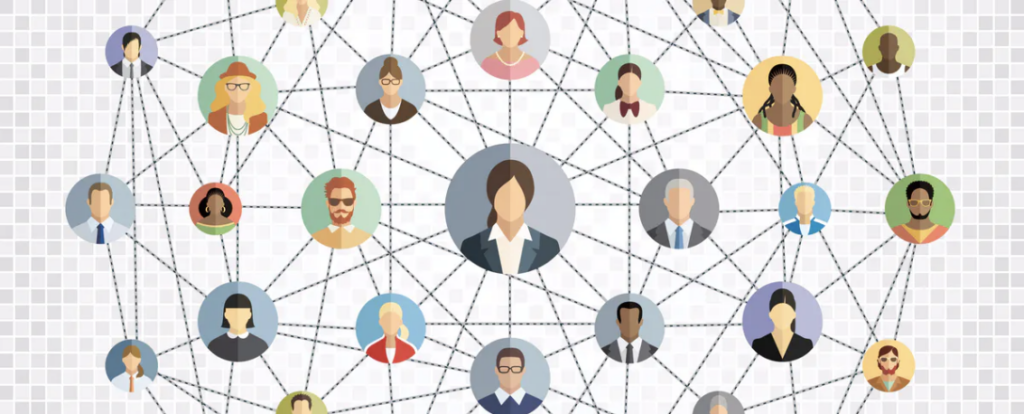
Image representing our personal learning network and demonstrating our connection to others.

After going over the readings for the first week I came to better understand what our PLN is. Our personal learning networks allow us to connect to people, collaborate, and learn from each other, expanding our professional and social network. From a marine biologist in training point of view, the online world is a great way to stay connected to the new research being conducted everyday and share valuable information with each other to further research.  

  1. What does it mean to network using social media?

Technology has definitely changed the way we share information and connect with each other. Social media has become a huge part of this connection as our society continues to become more digitized. The readings talk about the new ways we seek out, access, and store information continues to expand. From video sharing sites to collaborative online spaces, the online world has become a huge part of our everyday lives. When just looking at social media, we can quickly look up someone using their first and last name. We can make connections with employers and see what our friends are up to. Personally as a huge user of social media, I find it as a great way to stay connected with my friends!! Overall, I believe that to network using social media is to create networks that support our professional development and stay connected as a society. 

  1. How are we motivated to participate in networked publics?

Thinking about all of the different online spaces I use… there is a lot! From various social media accounts, to LinkedIn, to Google drive programs for work, mattermost, slack, and more, to participate in networked spaces is not just a motivation, it is needed to stay connected. Reflecting on the readings from the week, the main theme I found between them was the opportunity for online networked publics to connect us to future job opportunities. Like LinkedIn for example- this is a great online networked space where employers can find out about your past job experiences and skills. It also allows us to look up various organizations and companies, view who has worked there in the past, opinions about the company, and view job openings. Networked publics allow us to build connections, maintain connections, and activate new connections. 

  1. What are the risks & rewards of public communications?

Online networked spaces are a great way to connect with new employers and collaborate with different organizations/ companies. Although, we have to always continue to be aware of what we post on our social networked spaces. As mentioned in the readings, online machines can take information from our social spaces and send us targeted ads, job postings, possible social media connections, and more. The possibility of our data being misused and the non-existence of privacy continues to grow. We are continuously subject to advertising and personalization based on what we post and who we connect with. Reflecting on past summer camp job experiences, the one thing we had to do was use a different name at camp to keep our identity and social networked accounts private. As someone who also plans on graduating this year and starting a professional career, I have become more and more aware of what I post on my social media and what employers can view when my name is looked up on the internet. 

Overall, networked spaces allow us to stay connected with each other, expand our learning networks, and make professional connections with employers. Although we must increasingly be aware of our digital footprint, and what we post on our social networks, to help protect our privacy. 

© 2026 EDCI 338 Blog

Theme by Anders NorenUp ↑