Month: November 2023

Blog Post 10

How likely are individuals going to continue with their created content and their network?

This question has actually been a big topic of conversion online right now! A lot of big content creators are being asked the question of- how long is this “content creation” trend and income actually going to last?? Or, for the people that dropped out of high school to make content….. What happens when they are not relatable to the rest of the population and no longer have a big following? 

I honestly think that the influencer trend will continue for the next 10 years, although I believe that a lot of these content creators are going to quickly fall off the map. As mentioned in the paper by Del Giudice, “…the Internet is the top media application nowadays due to its high level of interactivity”. If influencers continue to post content that people will watch and add new levels of interactivity, the content creation will continue. 

For the public to be interested in your post, you need to come up with new ideas and be relatable to your audience. A lot of these influencers are already not relatable as they don’t go to school or have a typical 9-5 job. The more unrelatable someone becomes to the general population, people will watch them less. Content creator networks will become smaller as most influencers only relate to other influencers, when it comes to daily schedule, jobs, social networked groups etc. 

Are the skills that they developed applicable in professional practices?

If you are a high paid content creator/ influencer, yes I believe that skills you had to get to that position are applicable. Skills including; oral communication skills, video editing, scheduling posts, creating ideas for content, managing sponsors, networking to bigger organizations for brand deals, and helping sell products are all skills that can be used in a professional environment. With the content and deals that these influencers get, we see them building/ starting their own businesses, and using their platform to sell products from their business as well. In the new age of technology and content creation, knowing how to quickly adapt to changing trends is super important to keep brands relevant and relatable. The skills built when networking with others, is also extremely valuable in business development.  

Can your PLN be used to help professional development post-course? Can your PLN be relied on to open professional opportunities?

Personal learning networks can 100% help in professional development! Reflecting on the Wakelet Podcast, they discussed how using Twitter and being able to connect with other educators online has been super helpful for getting ideas for their own classrooms. When it comes to conferences, having ‘met’ people through online platforms before, makes approaching others easier and makes those real life connections more comfortable. These connections also allow for further development of your own learning, connecting you with new trends and resources. Using your PLN we can share resources and experiences, creating a continuous learning environment. Making new connections and maintaining that online identity, can lead to job referrals, collaborations, and other career advancements.

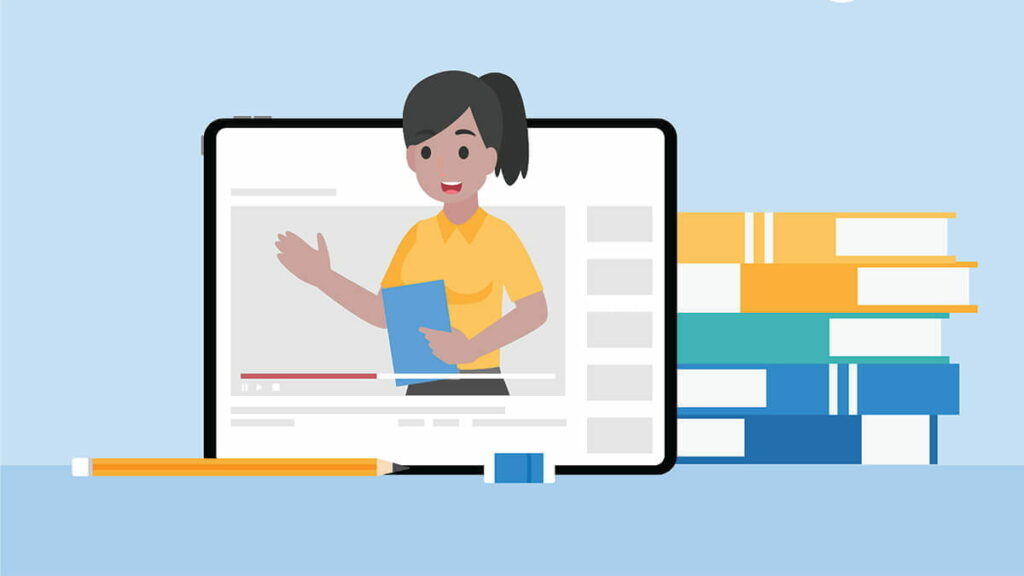
Image 1. Shows use of technology to connect to online spaces

Overall, the most important thing is to get uncomfortable with technology. Try new things, join online chat groups, make new connections because you never know who you might meet! Make that LinkedIn profile, comment on employers posts, join local community chat groups to meet new people. The opportunities now are endless, when it comes to career opportunities and our ability to network with others. 

References: 

The Wakelet Podcast (2022). The Benefits of Growing your Network & PLN. Youtube Podcast. 

Del Giudice, M. (2014). From Information Society to Network Society: The Challenge. In: Social Media and Emerging Economies. SpringerBriefs in Business. Springer, Cham. https://doi.org/10.1007/978-3-319-02490-5_5
Blog Post 9

What is Media Literacy?

Media Literacy is the “medium of delivering messages” (Trilling et al. 2009). Is the ability to access, evaluate, and create media content in various forms. It involves interpreting media sources such as social media and news sources, and understanding its influence on people and communities. From the podcast for the week the person being interviewed (Julie) mentioned that media literacy is changing everyday! They also mentioned the insane amount of influence that media literacy can have on people! Nowadays, influencers can influence people to buy the product that they’re selling, and a lot of people are compelled to buy that product to look like that influencer or be just like that influencer. In the interview, they brought up Fyre Festival which was sold as this luxurious festival with all the top artists who were featured in those advertisements to sell that product- and people bought into it.  People will watch and buy into compelling news and advertisements, and that is how news stations make their money. 

Why is it important?

Media literacy is important to inform others about political matters, news events, and various things going on in the world. The biggest example I can think of was the pandemic regarding updates on where to get vaccinations and health regulations. All of this information was given to us through online media resources including TV.

As discussed in the podcast, Julie mentioned as someone in an educational role, you can connect with other educators online. Through your PLN and online chat groups, educators can get feedback and guidance or help with problems that may arise in their classes!

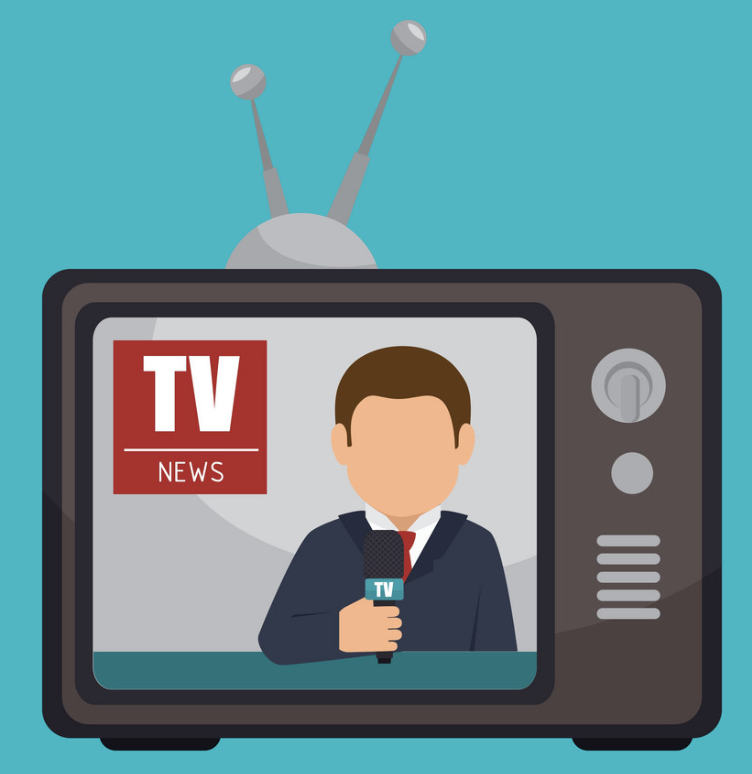
Image 1. Represents TV media literacy

Why is it dismissed?

Media can commonly be dismissed if it doesn’t follow your own views or opinions on something. As mentioned in the podcast by Julie, they said something which I found really interesting which was that- ‘we choose news outlets that are on our side, and follow our opinion’. They also mentioned that news is a business, and news talks about things that their viewers are interested in, and that’s how they make money. Possibly credible resources can be dismissed if they don’t follow what we usually see on the news through our news outlets or share our opinions on a matter. 

Why should you aim for varied views but the factual consensus in your PLN?

Varied views in your Personal Learning Network help you diversify what information you’re learning, allow you to connect with others, and understand their opinions on different matters. It lets you to expand your critical thinking skills when analyzing and evaluating others ideas on topics. It also prevents biased opinions and information. When connecting with the same people with the same ideas, it can be an echo chamber where beliefs and opinions are continuously reinforced without learning anything new. When looking for reliable news, it is important to do your own research and look at various different sources to distinguish facts from opinions.  

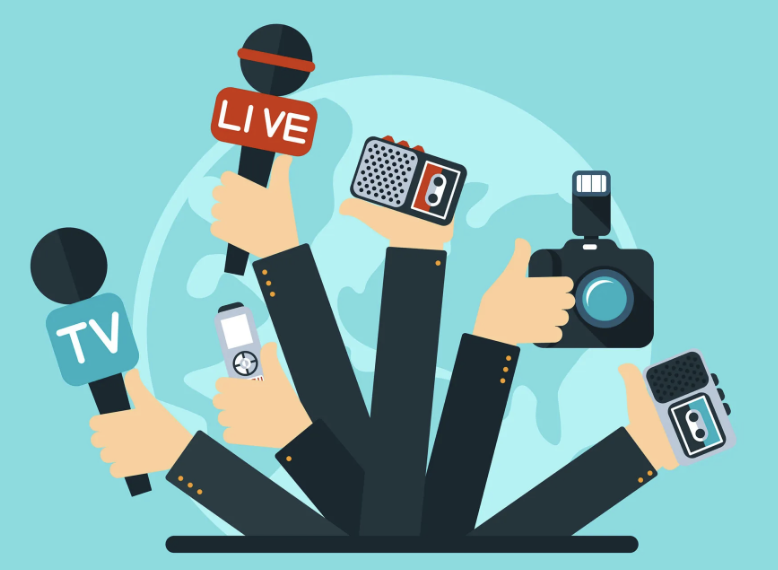
Image 2. TV news

Open dialogues about media literacy and how factual information can create conflict. Why does this happen?

Thinking back on what was said in the podcast and from my own experience of what happened during to media literacy during the pandemic… different forms of media literacy can spread a lot of misinformation, and if that one person believes in that misinformation they will continue to seek news sources that feed them that misinformation. There was a lot of conflict between getting vaccinated, staying unvaccinated, wearing masks, not wearing masks etc. A lot of the information that some of these people believed in, were not coming from reliable sources. This then led to a lot of protests on the matter and created conflict within our communities. 

What is the benefit of having a PLN that values media literacy?

Having a PLN that values media literacy allows you to create a collaborative learning environment. In these collaborative spaces we can better connect with each other and participate in online environments.

References: 

Trilling, Bernie., & Fadel, Charles. (2009). 21st century skills learning for life in our times / Bernie Trilling and Charles Fadel. (1st ed.). Jossey-Bass.

Smith, Julie. (2021). EDCI 338 – MEDIA LITERACY. Youtube Podcast.

Blog Post 8

Which social media platforms are beneficial in education?

Based on the reading this week, some of the different social media that was talked about included WordPress (which we use for this class to post blogs), Twitter and Google community programs. Twitter I was surprised about because I personally don’t use Twitter, although Twitter is described as establishing open conversations and being able to connect through public conversations where anyone can jump in. The Google Community online programs were referred to as more private programs where you can private message each other. Thinking about my own personal education experience I would say YouTube has been one of the most important social platforms for education because there are so many tutorial videos on how to solve different equations or quick crash course summaries of a topic you might have learned in class. In our discussion, we talked about how Instagram group chats and Discord are a helpful way for students to communicate and chat with each other, or help solve homework questions. 

As discussed in our groups this week, it was brought up that having a social platform and PLN can be great for educators to connect and share educational resources. It’s also great for teachers to find different ways to teach your students. As I’d mentioned before, YouTube is a great resource to find quick videos that can introduce a topic to students. 

When working with the vulnerable sector, how does social media fit into professionalism and regulations?

When considering the vulnerable sector, I think of children’s use of the internet and interactions. From personal experience working at a summer camp, we had to use “camp” names to help keep our identity private and to stop campers from looking us up on social media. As a staff we were also told to not follow our campers on social media platforms for professionalism and to keep our accounts private. Seeking consent to use an image of a child is a well known practice of professionalism and having parents sign photo release forms is essential to maintaining that privacy! Maintaining professional boundaries are important when interacting and working with youth to protect their privacy and your own. 

Community communications go beyond blogs and social media shares, how does a PLN help and hinder the development of thoughts and ideas in education discourse?

Personal Learning networks that are well connected and diverse, are great ways of learning new information and making new connections with others. As defined in the reading by Alec Couros and Katia Hildebrandt; “ Personal learning networks are the sum of all social capital and connections that result in the development and facilitation of a personal learning environment.” New tools, artifacts, processes, and connections help hinder new thoughts and ideas. In the video for the week, it also talked about the 3 ways for teachers to get connected including following others, getting connected, reading what others are up to, giving back and sharing with others! These are just some of the ways PLN can bring new thoughts and methods of teaching to education. PLN helps educators solve problems and stay up-to date with recent research. 

What are some problems with social media communications in educational settings?

Integrating social media into educational settings you need to create rules and boundaries of using any online tool. If the online tool is not directly related to that class, such as Brightspace (used at UVic) or Google Classroom, it is easy for students to become distracted or use that tool for things other than coursework. Other general problems that could arise include online cyberbullying, misinformation through online sources, and in general access to online social media platforms. If a learner does not have access to the internet or technology, it is difficult for them to participate in online communications in educational settings. As an educator maintaining a professional profile and role on social media is also important as your students can look you up on social platforms. 

In the reading for the week, and discussed in our groups, there was mention of Adult learning theory, also known as andragogy, where adults learn differently from children and that these differences should be acknowledged. I feel that social media has been so easy for those growing up with it to use and incorporate into our everyday lives, we forget about how adults might need a different way of learning. I see this as another problem of online communications, as nowadays all course material are posted online and professors and educators who are adults need to know how to use these online platforms to share class material with learners. 

References: 

Couro, Alec. Hildebrandt, Katia. (2016). Emergence and Innovation in Digital Learning.

Image link: https://www.waldenu.edu/media/4752/seo-1154-bs-online-teacher-on-tablet-monit-367694974-1200×675

© 2026 EDCI 338 Blog

Theme by Anders NorenUp ↑